
#P14819. [ICPC 2023 Yokohama R] Color Inversion on a Huge Chessboard

[ICPC 2023 Yokohama R] Color Inversion on a Huge Chessboard
Description
You are given a set of square cells arranged in a chessboard-like pattern with horizontal rows and vertical columns. Rows are numbered 1 through from top to bottom, and columns are also numbered 1 through from left to right.
Initially, the cells are colored as in a chessboard, that is, the cell in the row and the column is colored black if is odd and is colored white if it is even.
Color-inversion operations, each of which is one of the following two, are made one after another.
Invert colors of a row: Given a row number, invert colors of all the cells in the specified row. The white cells in the row become black and the black ones become white.
Invert colors of a column: Given a column number, invert colors of all the cells in the specified column. The white cells in the column become black and the black ones become white.
The number of distinct areas after each of the operations should be counted. Here, an area means a group of directly or indirectly connected cells of the same color. Two cells are said to be directly connected when they share an edge.
Input Format
The input consists of a single test case of the following format.
$$\begin{aligned} &n\ q \\ &operation_1 \\ &\vdots \\ &operation_q \end{aligned}$$The integer is the number of rows and columns (). The integer is the number of operations (). The following lines represent operations to be made in this order. Each of them is given in either of the following forms.
- ROW : the operation “invert colors of a row” applied to the row ().
- COLUMN : the operation “invert colors of a column” applied to the column ().
Output Format
Output lines. The -th line should contain an integer denoting the number of areas after the -th operation is made.
3 3
ROW 2
COLUMN 3
ROW 2
3
2
6
200000 2
ROW 1
ROW 1
39999800000
40000000000
Hint
:::align{center}
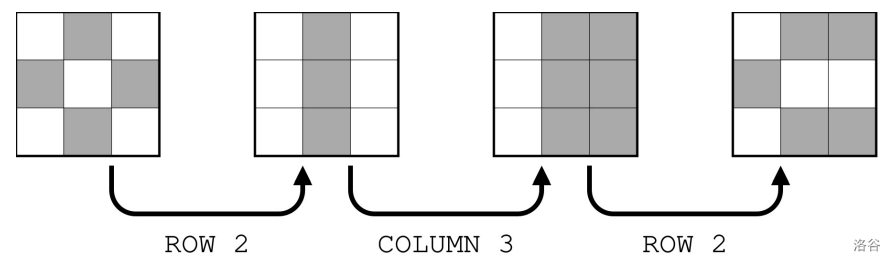
Figure F.1. Illustration of Sample Input 1 :::
 京公网安备 11011102002149号